
The month is over. Sales were excellent, and the P&L indicates a profit and nothing is seriously wrong.
Check the restaurant’s account.
The number may not be exactly what you’d hoped for.
This gap can be a source of frustration for restaurant owners as they feel that profits and cash available should speak the same truth. They don’t add together. A P&L examines how well the company’s financials have performed over a certain time in time, whereas the bank account represents the timing of money actually being moved into and out of the business.
Understanding the difference will alter the way a restaurant owner views their finances.
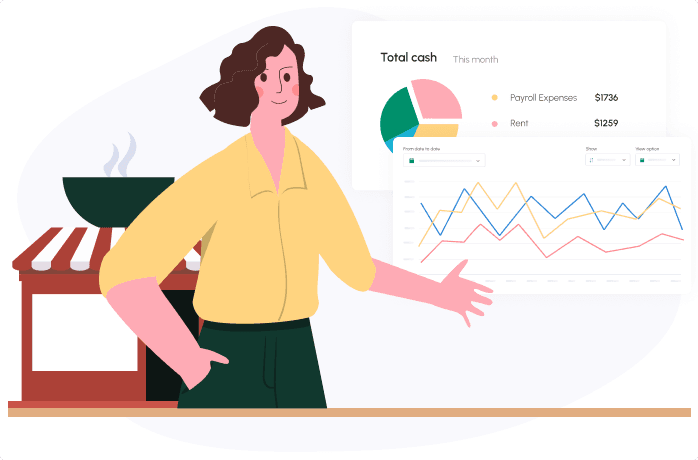
Look at what happens in a normal week. Food is paid for by customers. Paying employees is necessary. The invoices for food and drinks are issued. Rent is on the way. Deposits made with credit cards come with their own schedules. Sales tax collected is an obligation.
The buying for next week has already started.
When you concentrate on revenue or the number of dollars earned at the end it’s easy to overlook a great deal of activity.
The clue may be hidden in the price of the best.
If the restaurant’s profitability starts to decline, the cost of food, drinks and labor expenses should be taken into the equation.
The prime cost is comprised of both materials and labor. The bookkeeping chef’s guideline places primary costs between 60%-65 percent for a variety of restaurants and stresses weekly monitoring as opposed to staying until the end of of the month.
It is essential for you to recognize changes earlier than worrying about the exact percentage.
Imagine that the restaurant usually performs within its targets however, this week’s rate increases. Maybe the number of overtime hours increased. The price of drinks may have remained the same while food costs rose. An increase in the percentage of food items could prompt the owner to examine purchasing, waste, menu mix, portions or invoices from vendors.
The percentage is the key. It is in the activity in the restaurant.
Weekly reports make the conversation possible, while everyone will be able to recall what occurred.
After a period of two to three weeks, it becomes more difficult to reconstruct the details.
The Vendor’s bills arrive
The restaurant pays later for the food items it buys. It’s because of this timing that understanding profits alone can not address all cash issues.
Vendor invoices need to be accepted and logged. In a business that has many suppliers, doing this manually can become an administrative burden.
Automating accounts payable can streamline this process, reducing routine tasks like handling payments and bills. Systems for bookkeeping that are linked will give the owners a clear picture of obligations, even if they’ve not yet been paid.
It’s useful because, viewed as a whole, the balance of a restaurant’s bank account may appear to be healthier than its actual short-term financial situation.
There may be $80,000 sitting in the account as of today. The $80,000 figure means very tiny if rental, vendors or payroll make an enormous amount over the next few days.
That leads naturally to cash flow forecasting.
What happens to the money we have received after we’ve received the cash we’ve been expecting and met all of our obligations?
The distinction could be important in deciding if this is a suitable week to upgrade equipment, make an addition purchase, or maintain cash.
You may not have been rightfully entitled to all the money you believed.
Sales tax illustrates this in particular.
Restaurants receive money from their customers, which they must be able to manage in accordance with their tax obligations. If these cash-flows are grouped together with operating cash, it could give a false impression of the amount available for spending.
Consistent records support the tax compliance of sales while giving management a more realistic understanding of the restaurant’s financials.
This is why it is that restaurant accounting functions better when financial responsibilities don’t are separated from other responsibilities.
Prime cost affects margin. Vendor purchases affect COGS and future payments. Payroll affects both the labor and cash percentage. Cash flow is affected by sales tax. P&Ls are used to track the financial performance. Forecasting can also be useful for management.
The pieces are connected.
Bookkeeping Chef combines restaurant-specific reports with system integrations. Specialized outsourced bookkeeping services are an excellent option for owners who don’t have the time to reconcile their financial information. They are able to handle the bulk of the accounting task but without taking the owner away from the financial conversation.
The last part is important.
It’s not the intention of restaurant owners to stop checking their books just because someone does. Owners should receive information which will allow them to understand what’s happening.
Don’t assume that the P&L is wrong if the accounts appear to be in a good state, yet the P&L indicates that the restaurant has earned money.
Find out what transpired between you and your partner.
This question will reveal more about your company than any number.